
The Execution Gap: Why Partner Behaviour Matters More Than Strategy

The familiar moment
The strategy away day has gone well. The leadership team has spent two days debating the firm's future. The discussions have been thoughtful. The priorities are clear. Everyone leaves the room optimistic. There is genuine energy around the table and a shared belief that the firm has a clear direction.
Fast forward three months. The same priorities appear on the Executive agenda. Progress is patchy. Some initiatives have gathered momentum, others have barely moved. Partners remain supportive in principle, but day-to-day pressures have taken over. Client work comes first. Difficult conversations are postponed. Old habits quietly continue.
The strategy hasn't failed. It simply hasn't been executed effectively.
Over many years leading operational teams within large professional services firms, this is one of the most common patterns we observed. Leadership teams rarely struggled to decide what they wanted to achieve. The real challenge was translating collective intent into consistent action across hundreds of busy, autonomous professionals.
That's where the execution gap begins.
What is really happening?
Most firms do not suffer from a lack of strategy. They suffer from a lack of behavioural alignment.
The PwC Law Firm Survey 2025 provides an interesting insight. Between 40% and 70% of firms reported dissatisfaction with the progress of their organic growth initiatives. That should give every leadership team pause for thought.
It suggests the issue is rarely generating ideas. It is delivering them. Strategy succeeds or fails through hundreds of seemingly ordinary decisions made every day across the business.
Does a partner introduce a colleague from another practice area, or keep the client relationship tight?
Do they embrace AI and encourage their team, or quietly continue working as they always have?
Do they delegate work appropriately, creating development opportunities for others, or hold onto tasks that someone else could complete?
Do they make decisions quickly, or allow uncertainty to slow progress?
Do they actively reinforce the firm's priorities, or unintentionally send different signals through their own behaviour
These moments rarely appear on a dashboard. Yet collectively they determine whether strategy becomes reality.
Leadership teams often spend significant time refining strategic plans, while giving far less attention to the behaviours needed to deliver them. The uncomfortable truth is this:
Strategy doesn't change businesses. People do.
What we learned in operational leadership
Across our COO careers, we worked on strategies that ranged from improving productivity and strengthening cash flow to driving growth, embedding new technology and leading organisational change.
While the objectives were different, one thing remained remarkably consistent. The strategies that delivered results were rarely the most sophisticated. They were the ones where partner behaviours aligned behind a clear direction.
Over time, a number of leadership principles proved decisive.
1. Sponsorship must be active, not symbolic
A partner saying, "I support this" is not sponsorship. Sponsorship is visible ownership. It means setting expectations, reinforcing messages, making decisions, removing obstacles and holding people to account.
When partners actively championed an initiative, teams moved with confidence. When sponsorship was passive, momentum quickly faded.
2. Clarity drives action
Partners rarely resist change because they disagree with the strategy. More often, they struggle because expectations are unclear.
Partners are incredibly busy people. Every day they are balancing client demands, business development, people leadership and operational responsibilities. If strategic priorities aren't translated into simple, specific actions, they inevitably compete with the immediate demands of running a practice and client work will almost always take precedence.
McKinsey’s research reinforces this point, “noting that people need to understand what these goals mean for their day-to-day jobs and what they will be expected to do differently”; without that clarity, behaviours - and ultimately the way work gets done - are unlikely to change.
When we made expectations explicit - what needed to happen, by whom and by when - behaviours shifted.
People are far more likely to commit when success is tangible rather than open to interpretation. Clarity reduces uncertainty, makes priorities easier to act on and gives partners confidence that they are focusing their time where it will have the greatest impact.
3. Consequences must align with behaviour, not just financial metrics
If collaboration, working capital or AI adoption genuinely matter, they need to feature in the conversations that shape performance.
When expectations were reinforced through performance discussions, reward, progression and leadership responsibilities, behaviours changed. Not overnight, but consistently.
People naturally pay attention to what leaders consistently recognise, discuss and reinforce.
4. Pace matters
Leadership sets the pace for the organisation. When decisions drift, priorities become blurred and energy dissipates. When ownership is clear, decisions are made promptly and leaders visibly follow through, teams respond with pace of their own.
Momentum is rarely accidental. It is created.
5. Behaviour spreads
Partner behaviour is contagious. The partners who demonstrated clarity, discipline, collaboration and follow-through influenced far more than their own teams. They established the standards that others naturally followed.
Positive behaviours create momentum. Negative behaviours create permission.
The biggest lesson?
Partner behaviour is not a soft leadership issue. It is one of the firm's most important commercial assets.
When leadership behaviours shift, execution improves. When execution improves, performance follows.
Practical actions for leadership teams
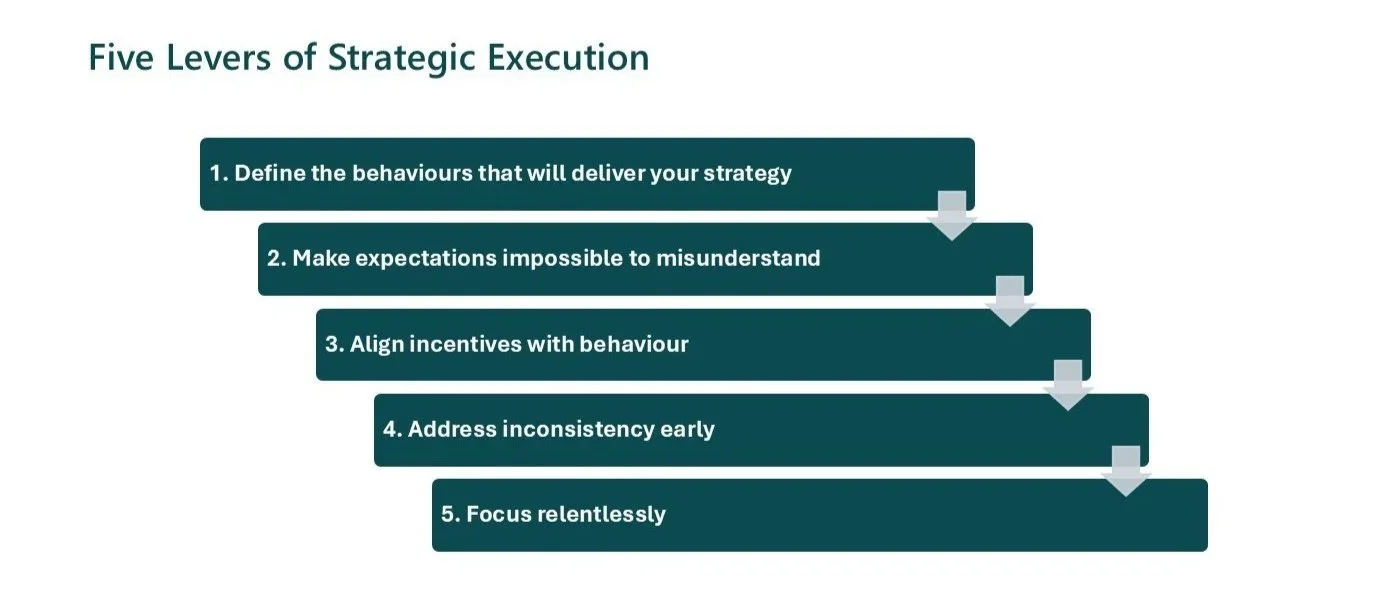
1. Define the behaviours that will deliver your strategy
Most firms can clearly describe their strategic priorities. Far fewer can clearly describe the partner behaviours needed to achieve them. If collaboration matters, what does good collaboration actually look like? If AI adoption matters, what should partners be doing differently next month?
Be specific. Behaviour is easier to influence than aspiration.
2. Make expectations impossible to misunderstand
Don't assume partners interpret priorities in the same way. Translate strategic objectives into practical expectations. Discuss them regularly. Use real examples. Celebrate those demonstrating them well. Clarity removes ambiguity.
3. Align incentives with behaviour
Partners pay attention to what is recognised, rewarded and discussed. If remuneration, promotion and performance conversations continue to focus solely on financial outcomes, behavioural change will always struggle to gain traction. The message becomes clear:
"The strategy matters... but these are the things that really count."
The two must reinforce one another.
4. Address inconsistency early
Every partnership has influential individuals. The temptation is often to overlook behaviours that conflict with the agreed direction because someone is a strong performer commercially.
In our experience, this creates a far bigger cost over time. Leadership credibility is built through consistency. People watch what leaders tolerate every bit as much as what they promote.
5. Focus relentlessly
One of the biggest mistakes leadership teams make is trying to change too much at once. When every initiative is urgent, none receives the attention needed to succeed.
Choose a small number of behaviours that genuinely support the firm's strategy. Repeat them consistently. Discuss them regularly. Hold people accountable. Then repeat them again.
Execution is rarely about doing more. It is usually about doing fewer things exceptionally well.
Questions for the leadership team
If someone observed your partnership for a month, what would they conclude the firm's real priorities are?
Which partner behaviours consistently accelerate your strategy?
Which behaviours quietly undermine it?
Are your incentives reinforcing the behaviours you want to see?
Where are leadership teams tolerating inconsistency?
If you removed your strategy document tomorrow, would people still know how they are expected to lead?
Key takeaways:
Strategy rarely fails because of the lack of a plan - it fails because partner behaviours don’t align with what the firm is trying to achieve.
Execution depends on clarity. Partners act with confidence when expectations are simple, specific and translated into day‑to‑day behaviours.
Sponsorship must be active, not symbolic. Visible ownership, timely decisions and consistent reinforcement are what create momentum.
Incentives and consequences shape behaviour. When collaboration, AI adoption or commercial discipline matter, they must feature in the conversations that influence reward and progression.
Leadership consistency is decisive. The behaviours leaders model - and the behaviours they tolerate - determine whether strategic priorities become reality.
Enjoyed this insight?
At Opal Advisory, we work with leadership teams across professional services to turn strategy into measurable performance. If this article resonates with the challenges your firm is facing, we'd be delighted to continue the conversation.